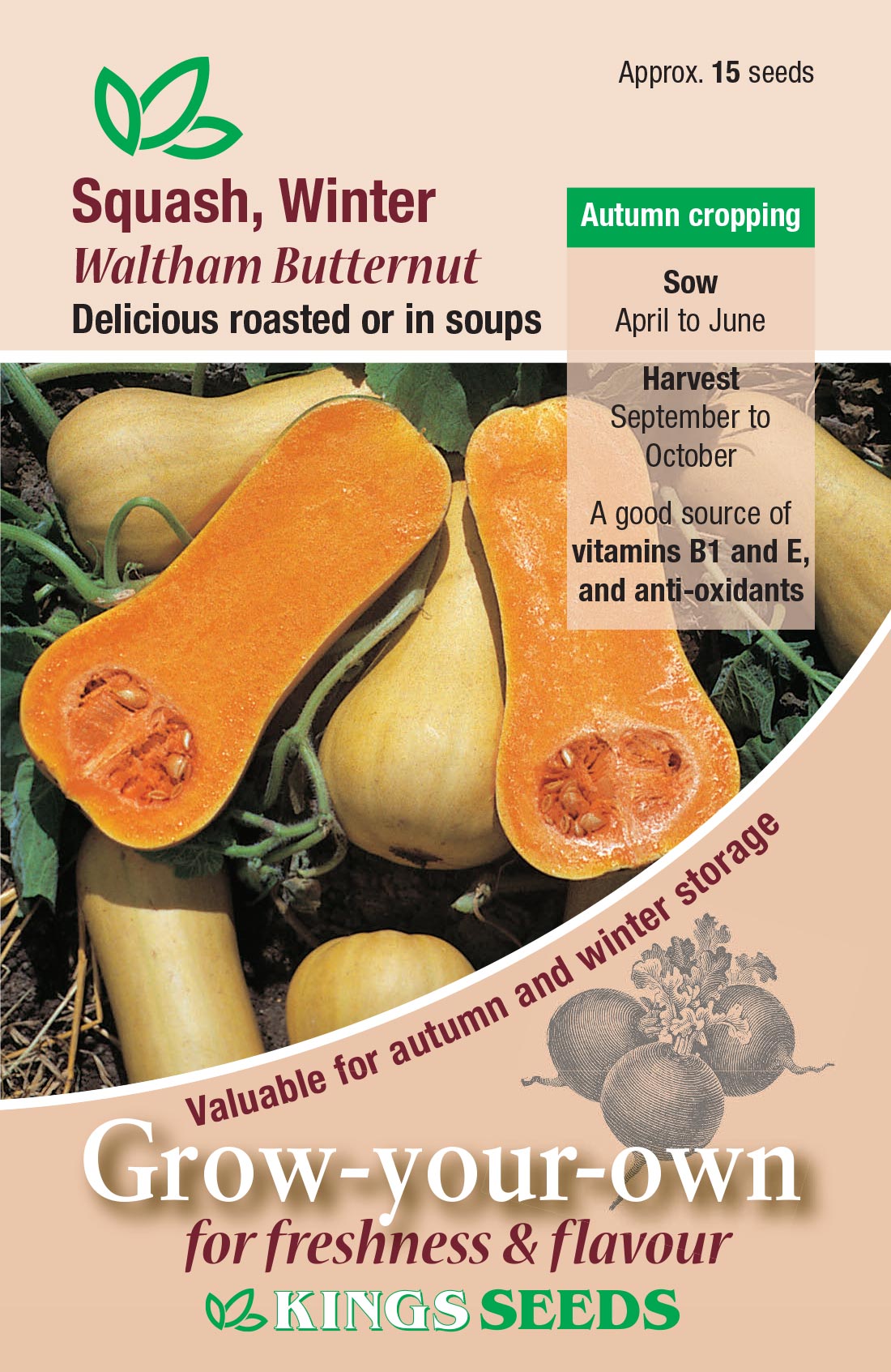
Winter Squash Waltham Butternut
£1.95
Waltham Butternut Squash seeds produce elongated pear shaped fruit which have a light orange golden colour with deeper orange flesh. They have a small seeds cavity inside. Scoop out the seeds before roasting or baking for a stunning taste. The plants can grow to heights of up to 2 metres tall, and each one produces 3-4 fruits. The average size of a waltham butternut squash is around 22cm long (9″) and 2kg in weight. These have a sweet taste but they get even sweeter after maturing. This variety matures in late autumn for winter storage. Prefers full sun!
Half-Hardy Annual.
Pack size: 15 Seeds
4 in stock
Description
Waltham Butternut Squash seeds produce elongated pear shaped fruit which have a light orange golden colour with deeper orange flesh. They have a small seeds cavity inside. Scoop out the seeds before roasting or baking for a stunning taste. The plants can grow to heights of up to 2 metres tall, and each one produces 3-4 fruits. The average size of a waltham butternut squash is around 22cm long (9″) and 2kg in weight. These have a sweet taste but they get even sweeter after maturing. This variety matures in late autumn for winter storage. Prefers full sun!
Half-Hardy Annual.
Pack size: 15 Seeds
Additional Details
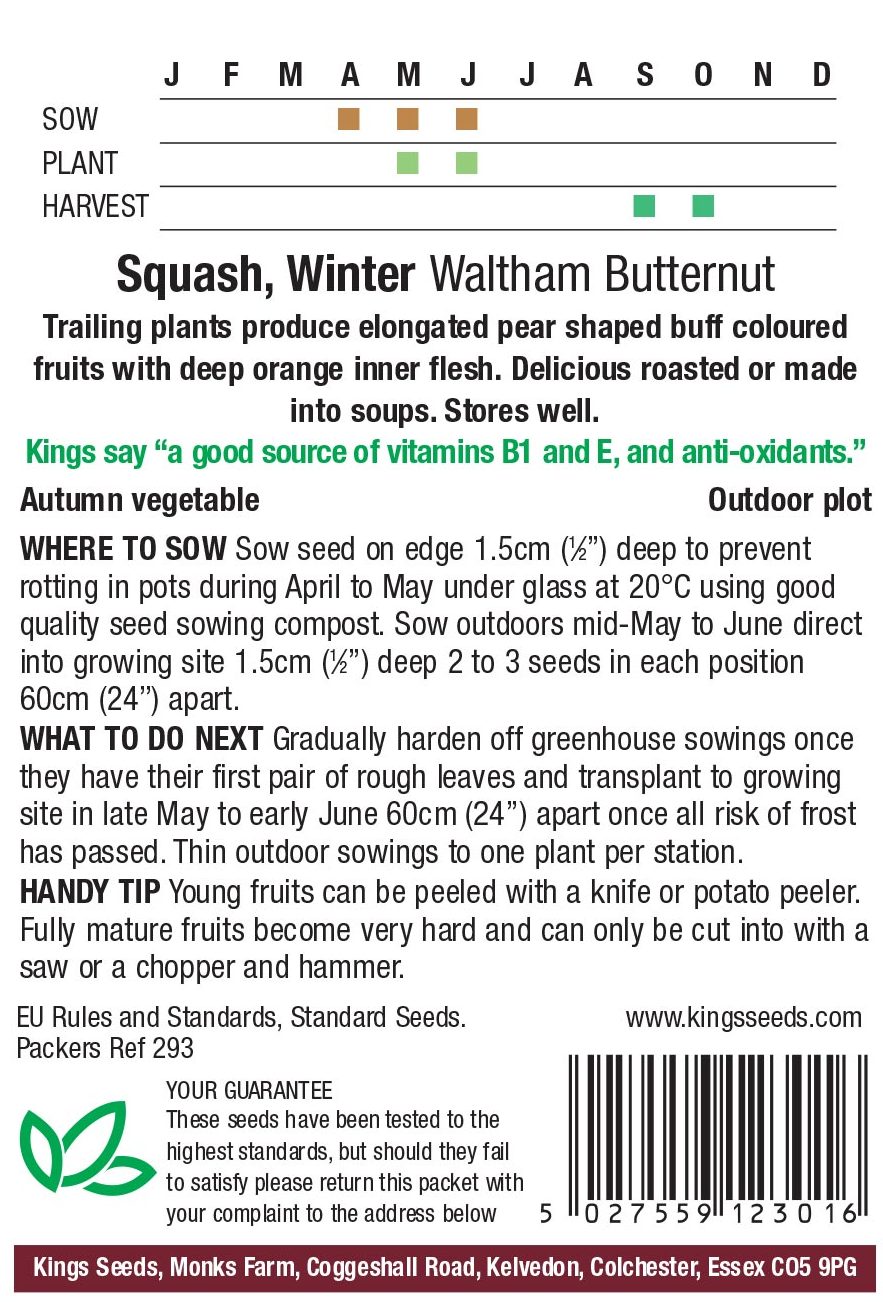
When to Sow Waltham Butternut Squash Seeds
April to May underglass or Mid May to June outside
Where to Sow
Sow these butternut squash seed on edge 1.5cm (1/2″) deep to prevent rotting in pots or trays during April to May 2.5cm (1″) apart under glass at 20°C (68°F) using good quality seed sowing compost. Sow outdoors mid-May to June direct into growing site 1.5cm (1/2″) deep 2 to 3 seeds in each position 60cm (24″) apart.
What to do next
Greenhouse sowings should be gradually hardened off once they have developed the first pair of rough leaves and transplanted to growing site in late-May to early-June 60cm (24″) apart once all risk of frost has passed. Outdoor sowings should be thinned to one plant per station.
Maturity
September to October. (Around 100 days after transplanting)
Nutritional Values
A good source of pro-vitamin A, vitamins B1, C and E.
Handy Tip
If harvested when young you can peel with a knife or potato peeler, but if left until fully mature they can be more challenging to cut.
Related products
-
- Out of Stock
- French Beans, Seeds, Vegetables
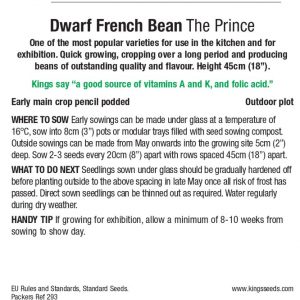
Dwarf French Bean – ‘The Prince’
- £3.20
- Read more
-